
Raw, Local Honey from Wautoma, Wisconsin
Welcome to the Honey page of V's Bees, LLC. Our honey is harvested from our apiary
at W6849 Bighorn Court in Wautoma, Wisconsin, and reflects the local floral landscape.
We focus on raw, unfiltered honey to preserve flavor, nutrients, and the true character
that comes from our bees foraging.
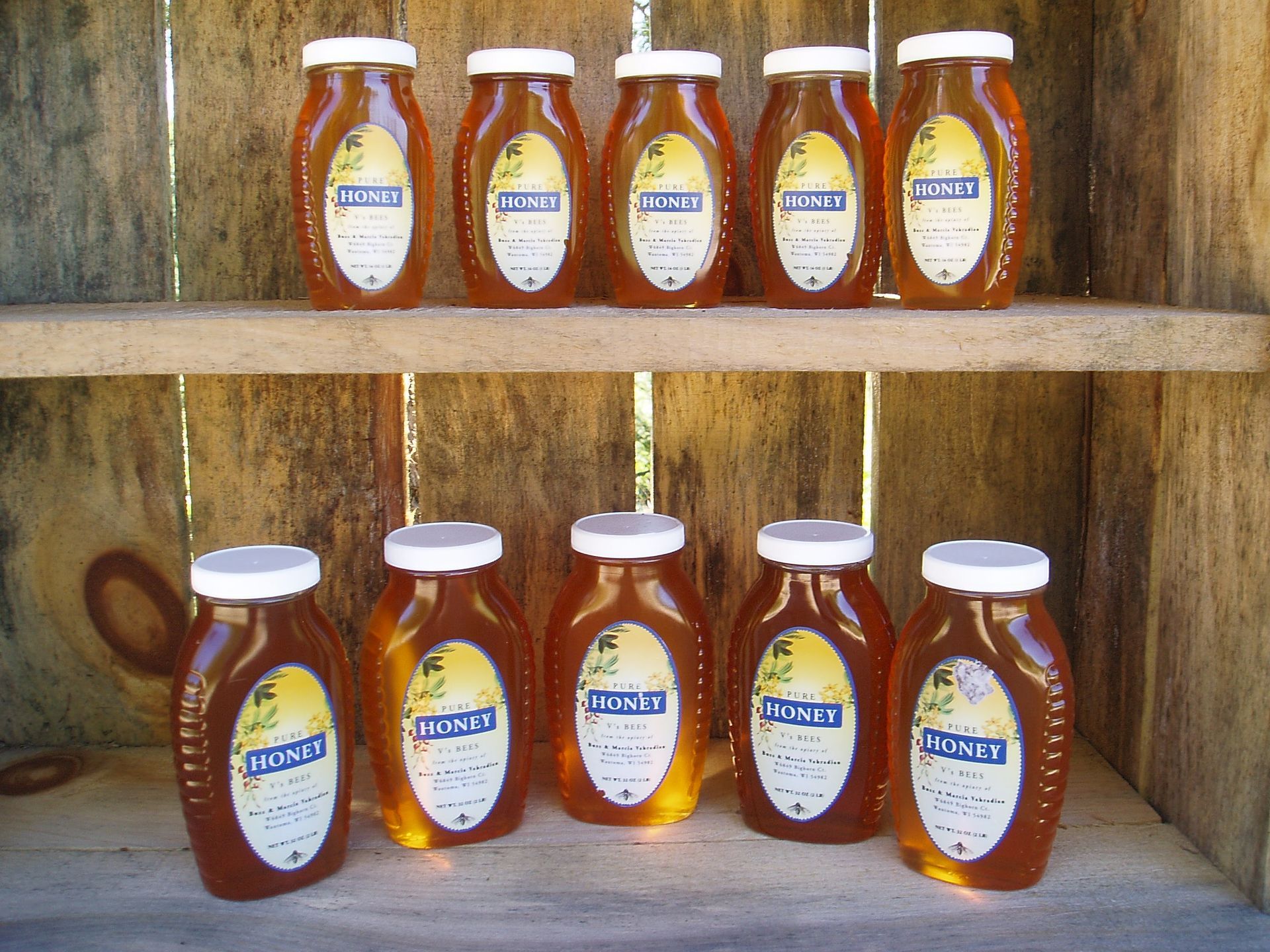
Why Honey Matters: Nutritional, Cultural, and Culinary Value
Honey has been prized for millennia for sweetness, preservation, and medicinal uses. Raw honey contains naturally occurring sugars, antioxidants, enzymes (such as diastase and invertase), and pollen. These components contribute to flavor complexity and have been associated with traditional uses like soothing throats, enhancing wound healing in topical applications, and providing energy as a natural carbohydrate source.
Culinary Value
Chefs and home cooks prize raw honey for its nuanced flavor profiles. Honey can:
- Sweeten without the flatness of refined sugar.
- Add floral or herbal notes to vinaigrettes, sauces, and glazes.
- Balance heat in spicy dishes and amplify caramelization in baking.
- Provide texture and shine in preserves and desserts.
Cultural and Local Value
Local honey ties people to landscape and season. Each jar can evoke a summer meadow, an early-summer clover patch, or a late-season goldenrod field. For consumers seeking local food connections, our honey is a direct, tangible product of nearby forage and practices.
Key Benefits of Choosing V's Bees Honey

Wildflower Honey (Raw, Unfiltered)
Description: Mixed floral sources from native and non-native wildflowers in our area. Typically medium amber with a balanced floral aroma.
Uses: Table honey, baking, drizzling over yogurt and cheese, general cooking.
Flavor Profile: Floral, slightly fruity, complexity that changes by harvest.

Clover-Influenced Honey (When Available)
Description: Common in mid-summer; clover nectar yields a lighter-colored, classic honey flavor.
Uses: Baking, hot beverages, breakfast spreads.
Flavor Profile: Mild, sweet, clean with familiar honey notes.

Late-Season/Autumn Honey
Description: Harvested later in the season, often darker with deeper flavors, potentially from goldenrod and late composites.
Uses: Robust cooking, marinades, winter baking.
Flavor Profile: Richer, sometimes with caramel or molasses undertones.

Specialty Small-Batch Runs
Occasionally we release small-batch jars labeled by precise location or floral dominance when a particular forage source stands out. These runs are limited and reflect unique seasonal conditions.
Processing: How We Handle Honey
Extraction
We extract honey to preserve delicate aromatics. Our extraction sequence:
- Uncapping frames carefully
- Centrifugal extraction
- Settling tanks to allow air bubbles to rise.
- We use coarse strainers to remove wax pieces while keeping pollen, nutrients and enzymes that contribute to flavor and functional qualities.
Bottling
We bottle quickly and label with jar size. Labels include basic liquification guidance.
Why We Minimize Filtration
Fine filtration removes pollen and some beneficial components. Our approach keeps honey as natural as possible, preserving pollen and enzymes that contribute to flavor and functional qualities.
How to Use Our Honey
Culinary Uses
- Spread: A perfect companion to warm bread, cheese, and charcuterie.
- Baking: Use for sweetness and moisture. Reduce the liquid in the recipe by 1/4 cup
for each cup of honey used. Add about 1/2 teaspoon baking soda for each cup of
honey used. Reduce oven temperature by 25 degrees to prevent over-browning.
- Glazes & Sauces: Honey’s sugar content promotes browning and a glossy finish.
- Drinks: Stirring into tea, coffee, or cocktails for a softer sweetness.
Health and Home Uses
- Soothing: Many use a spoon of honey in warm water or tea to soothe sore throats.
- Topical: Raw honey is sometimes used in first-aid for wound care.
- Honey should not be given to a child under 12 months of age.
Storage and Handling
- Temperature: Store at room temperature. Avoid freezing or prolonged exposure to heat.
- Crystallization: All pure honey will crystallize.There is nothing wrong with eating crystalized honey – it’s still honey and good to eat! Some folks prefer the crunchy texture. The natural sugars in honey (glucose and fructose) will bind together and form small crystals. To liquify, heat a pan of water, remove from heat and place the bottle in the pan of water. Do not microwave honey.
- Shelf Life: Honey is shelf-stable for years when sealed and stored properly.
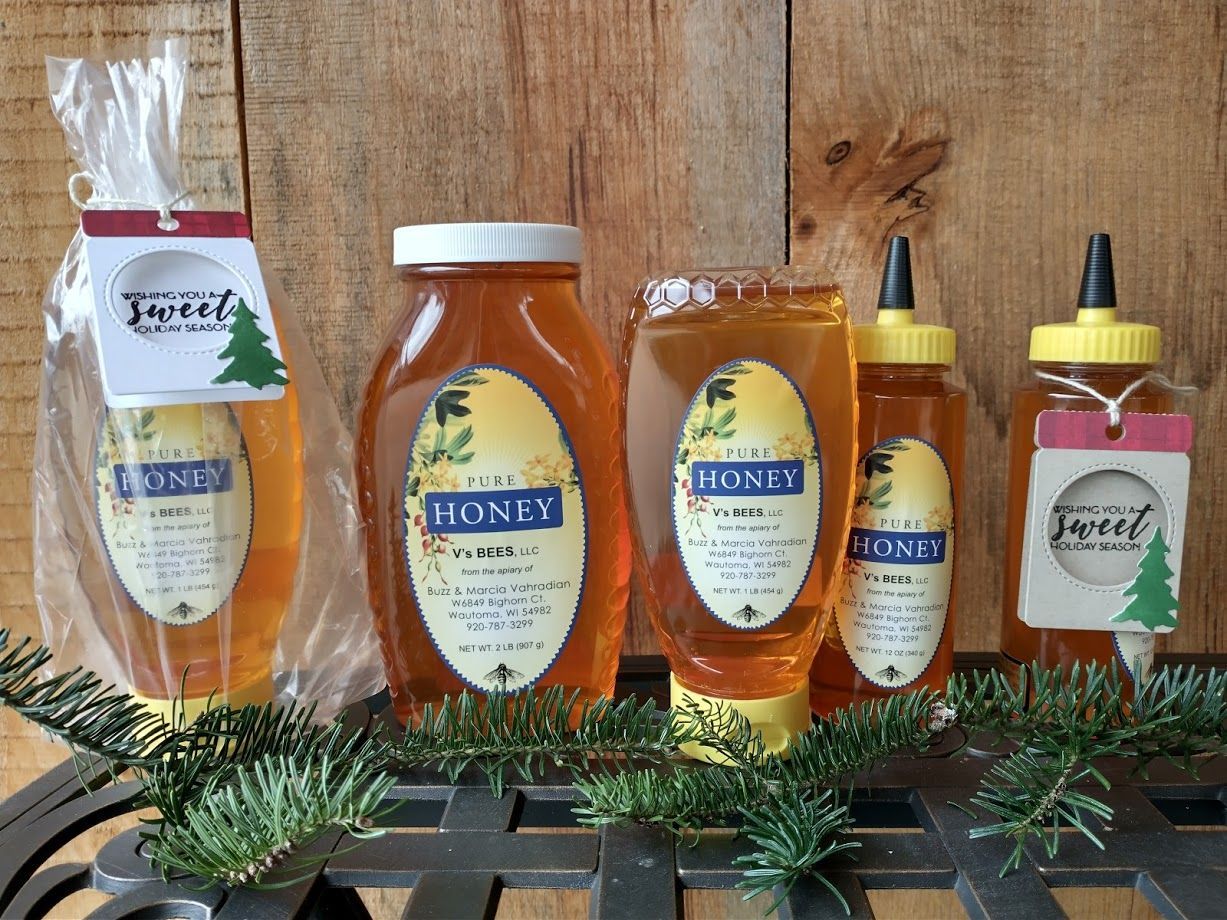
12oz cylinder
1lb jar
2lb jar
3lb jar
5lb jar
Buy Local, Buy Responsibly
When purchasing honey, consider:
How V's Bees Can Help
We offer jars for retail sale, seasonal runs for gift-giving, and wholesale packaging for chefs, shops, and markets. We label each jar with harvest details and are happy to discuss:
- Culinary pairings and recipes.
- Bulk ordering for catering or retail.
- Custom labeling or gift packaging in limited runs.
Pricing and Availability
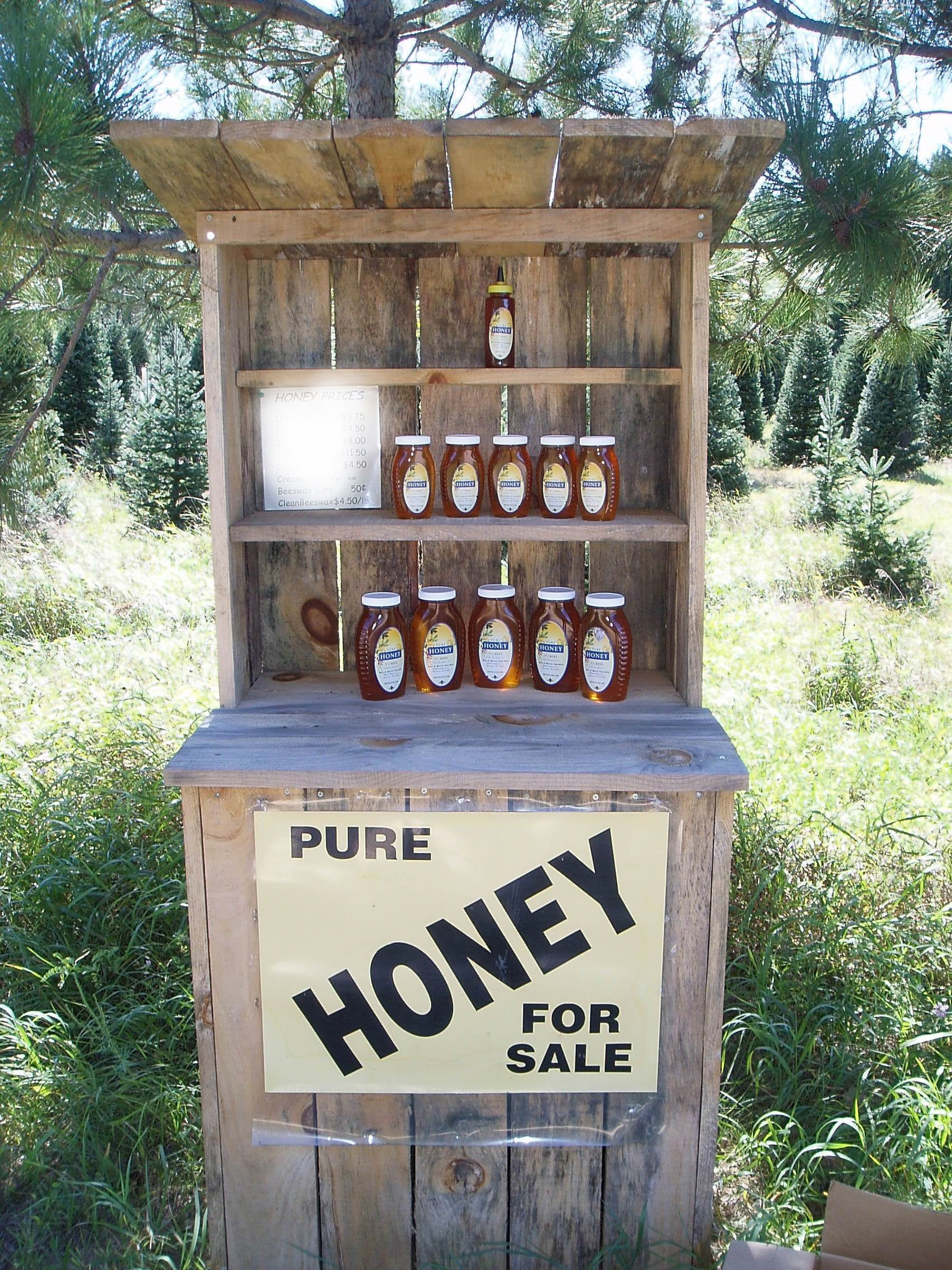
Because honey is produced seasonally and in variable quantities, availability changes throughout the year. To check current stock or pre-order seasonal releases, call (920) 787-3299. We also attend selected farmers’ markets and community events; follow local listings for appearances.
Frequently asked questions (FAQs)
What size jars do you offer?
We offer 12-ounce cylinders, 1-pound inverted squeeze bottles, 2-pound jars, 3-pound jugs and 5-pound jugs. We also sell pint sized jars of crystalized honey.
Does heating honey destroy nutrients?
High heat can reduce certain enzymes, beneficial antioxidants and damage delicate flavors. That’s why we favor low-heat or no-heat handling to preserve natural qualities.
Why does honey crystallize?
Crystallization depends on the nectar source, ratio of glucose to fructose, and storage conditions. It’s a natural physical process and does not indicate spoilage.
Is your honey pasteurized?
Our honey is raw and not pasteurized. We avoid high-heat pasteurization to keep natural enzymes and flavors intact. Our honey is raw and not pasteurized. We avoid high-heat pasteurization to keep natural enzymes and flavors intact.
Is honey safe for infants?
No. Honey should not be given to infants under 12 months due to the risk of botulism spores that infants cannot yet process safely.
Contact and Ordering
We are located at W6849 Bighorn Court, Wautoma, Wisconsin 54982.
V's Bees is committed to producing honey that captures local flavor, supports pollinator health, and produces honest, healthy honey for your table. Thank you for choosing local honey.